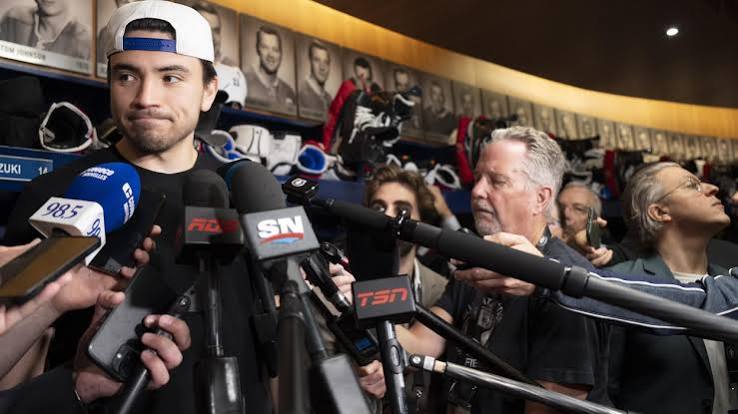
Whether you are a hockey fan or not, the NHL is facing increasing scrutiny surrounding Canadian teams and markets. With players requesting trades to U.S. teams in recent months, do Canadian Professional hockey teams have a PR problem?
For decades, Canadian NHL markets have offered passionate fans, historic rivalries and some of the most dedicated hockey communities in the world. Yet several high-profile player situations in 2026 have sparked debate about whether playing in Canada is becoming less attractive for various reasons including money, lifestyle, etc.
In recent months, NHL All-stars such as Brady Tkachuk requested a trade from Ottawa to Florida, Connor Hellebuyck left Winnipeg for New Jersey, and Detroit’s Dylan Larkin requested a trade from the Red Wings. Meanwhile, Nikita Kucherov has reportedly asked Tampa Bay to trade him, and there are rumblings that Auston Matthews will not be in Toronto for next year’s season and will be requesting a trade back to the U.S.
Although these situations are different, they raise an important question: Are players prioritizing American markets for better opportunities or is the Canadian market unsustainable with aggressive media scrutiny and often bullish fan bases that have been known to cyberstalk players with online harassment?

Brady Tkachuk: Leaving Ottawa for Florida
Brady Tkachuk’s departure from Ottawa was one of the biggest developments of the 2026 offseason.
After eight seasons with the Senators, including five as captain, Tkachuk requested a trade and was ultimately acquired by the Florida Panthers. One major attraction was the opportunity to play alongside his brother, Matthew Tkachuk.
For Ottawa, losing its captain was a significant blow. However, Tkachuk’s decision demonstrates that personal relationships and the opportunity to join a championship-calibre organization can outweigh loyalty to a city.
His move also raises a difficult question for Canadian franchises: How do they convince their biggest stars to stay when competing organizations offer attractive opportunities both professionally and personally?
Connor Hellebuyck: Family, Security and the Search for a New Opportunity
Connor Hellebuyck’s departure from Winnipeg is perhaps the most significant example of a Canadian franchise losing an established superstar.
After requesting a trade during the offseason when he was only in year two of a seven-year deal, the three-time Vezina Trophy winner did not report to training camp and was suspended by the Jets. On October 23, 2026, Winnipeg traded him to the New Jersey Devils.
Hellebuyck later explained that concerns involving his family’s safety, uncertainty surrounding his career and personal circumstances contributed to his decision.
Winnipeg also has one of the NHL’s most passionate fan bases, but that passion can come with intense scrutiny. When expectations aren’t met, fan frustration can be unforgiving, and players can find themselves under significant public pressure. That environment may add another layer to the challenges of playing in a Canadian market.
His situation is important because it challenges the assumption that Canadian teams simply need to offer more money or better hockey opportunities to retain their stars.
Players are making decisions based on their families and personal well-being as much as their careers. For Canadian markets, that creates another challenge when competing with American destinations.
Dylan Larkin: A Trade Request That Challenges the Narrative
Dylan Larkin’s situation offers an interesting counterpoint.
Unlike Tkachuk and Hellebuyck, Larkin plays for an American franchise. Despite spending his entire NHL career in Detroit and serving as captain for six seasons, he requested a trade during the offseason.
The situation escalated in October when Larkin informed the organization he would no longer play for the Red Wings until traded. Detroit subsequently suspended him without pay and confirmed it would continue exploring trade opportunities.
Larkin’s situation demonstrates that player dissatisfaction is not necessarily exclusive to Canadian markets, although his trade list does not include a single Canadian team.
Nikita Kucherov: Another Superstar Wants Out
The latest major development involves Tampa Bay Lightning superstar Nikita Kucherov.
Reports surfaced in late October that Kucherov had informed the Lightning he would not re-sign with the organization and wanted a trade. His current contract expires after the 2026-27 season, making his future particularly important.
On November 2, Kucherov publicly addressed the situation, explaining that his frustration was not about money but rather communication and respect.
He criticized the lack of communication with general manager Julien BriseBois and suggested the organization had made it clear he could leave when his contract expired.
Tampa Bay, however, has made its position clear: the organization has no intention of trading him.
Kucherov’s situation adds another dimension to the debate. He isn’t an American player looking to leave a Canadian market. He is a Russian-born superstar who has spent his entire NHL career in Tampa Bay.
His situation reinforces the idea that player-management relationships and open communication may be just as important as geography when determining where NHL stars want to play.
Do Politics Play a Role?
The relationship between Canada and the United States has become increasingly contentious, with trade disputes, tariffs and political disagreements adding tension between the countries.
Professional sports are not immune to national rivalries.
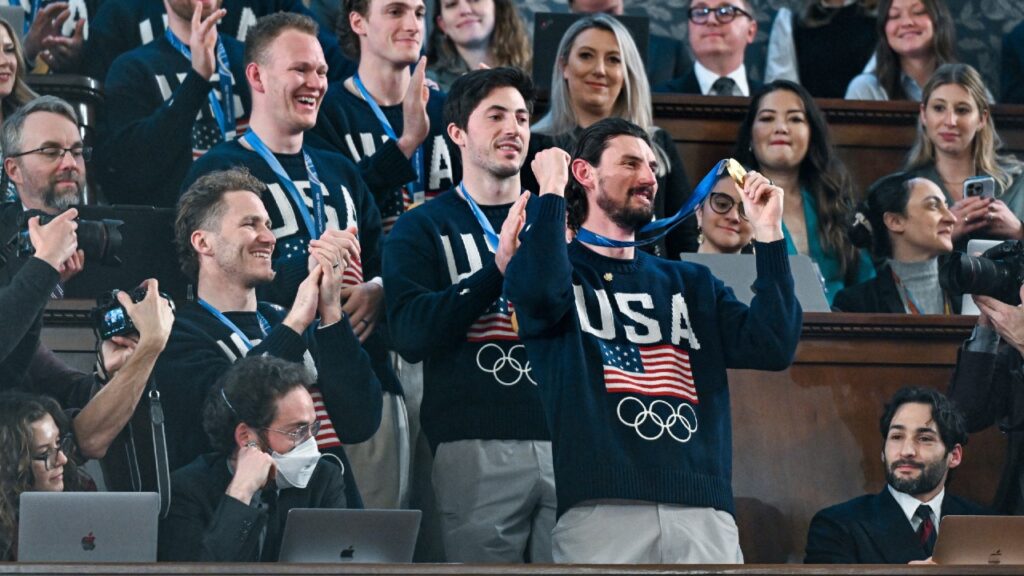
The 2025 Four Nations Face-Off and the 2026 Winter Olympics intensified the hockey rivalry between Canada and the United States. The United States defeated Canada 2-1 in overtime to capture Olympic gold, creating another memorable chapter in the rivalry.
For players, representing their country can strengthen national identity and relationships with teammates. For fans, those emotions can sometimes carry over into the NHL season.
The backlash was particularly noticeable when American Olympic players returned to their Canadian NHL cities. Some faced boos, criticism and personal attacks from fans who were still frustrated by Canada’s Olympic loss. Connor Hellebuyck’s experience in Winnipeg was especially concerning, with reports of threats directed at him and his family. Other players, including Auston Matthews and Brady Tkachuk, also faced scrutiny over their Olympic involvement as well as their White House attendance, although fan reactions varied.
Politics may influence the broader atmosphere, but individual career decisions are considerably more complicated.
The Importance of PR and Communication
One factor that should not be overlooked is the importance of strong PR and communication. Trade requests, contract disputes and disagreements between players and management can quickly become public issues, influencing how fans, sponsors and potential free agents view an organization or player. The situations involving Dylan Larkin and Nikita Kucherov show how poor internal communication can damage relationships and create unnecessary controversy.
There is also a longstanding perception that Canadian franchises operate in more intense, demanding media markets, where players face constant attention and scrutiny. This is often contrasted with markets like Florida, where players may enjoy greater privacy and can walk down the street without being recognized or approached. While this isn’t necessarily true for every player or market, the perceived difference in lifestyle and media attention can influence where players choose to play. Ultimately, organizations need to recognize that players are choosing not only a team, but also a city, lifestyle and level of public exposure.
NHL teams need to be proactive, transparent and consistent in how they communicate with players, fans and the media. Strong PR cannot fix every problem, but it can protect an organization’s reputation, maintain fan confidence and prevent difficult situations from becoming a larger team and/or player crisis.

Kelsie Wolfe is the Office Manager at Brookline Public Relations. With her cool-demeanor and organizational skills, Kelsie’s expert ability to coordinate logistics and inspire the team provides a strong foundation for every aspect of the agency.